Blog & Insights
Perspectives on senior talent, advisory careers, fractional work, and the future of experienced professionals.

Why Does Your Company Need a Chief Brand Officer?
Summary A Chief Brand Officer is a specialised leadership role, but the problem it addresses is familiar. A company may have strong marketing, sales and product teams yet still struggle to define what its brand should mean to customers, employees and the market, and who is accountable for keeping that meaning consistent. That is where the CBO role comes in. A Chief Brand Officer gives the brand a dedicated strategic owner, looking beyond individual campaigns and communications to how the brand is positioned, experienced and strengthened over time. The role is not entirely new in India. Godrej Industries lists Tanya Dubash as Executive Director and Chief Brand Officer, while Royal Enfield appointed Mohit Dhar Jayal as Chief Brand Officer to lead its brand and marketing strategy as it developed its global premium positioning. For companies considering this role, the question is not whether they have a brand, but whether it has become important or complex enough to require dedicated executive ownership. Who is a Chief Brand Officer (CBO)? A Chief Brand Officer is a senior executive responsible for shaping and protecting a company’s brand strategy. The CBO typically oversees brand positioning, identity, messaging and consistency across customer touchpoints, while ensuring the brand supports the company’s broader business direction. The scope varies by organisation. In some companies, the CBO oversees the entire brand and communications function. In others, the role focuses primarily on brand strategy, identity and long-term brand equity, working alongside the CMO and other senior leaders. The role extends beyond advertising. A company’s brand is shaped by its products, customer experience, communications and how consistently the organisation represents itself across markets. A CBO therefore works across functions rather than operating solely within marketing. The role can include responsibility for: A CBO may report directly to the CEO or sit within the broader executive leadership team. There is no single organisational model for the role. What does a Chief Brand Officer do? A Chief Brand Officer translates the company’s business strategy into a clear brand strategy and then ensures that strategy is reflected consistently across the organisation. The work can range from defining positioning and brand architecture to influencing customer experience, communications and major business decisions. The CBO role typically involves five interconnected areas. 1. Define the brand’s strategic position The CBO determines what the brand should stand for, who it is trying to matter to and how it should be differentiated. This requires more than developing a tagline. A strong brand position needs to connect with the company’s products, customers, competitive environment and long-term ambitions. 2. Build consistency across touchpoints Customers rarely experience a brand through one advertisement. They encounter it through a website, product, store, salesperson, customer service interaction, packaging, social media and, increasingly, digital experiences. The CBO helps ensure these experiences reinforce the same underlying brand. 3. Guide brand architecture and portfolio decisions For companies with multiple products, businesses or markets, brand architecture becomes important. The CBO may determine how the corporate brand relates to individual product brands, whether new offerings should use an existing brand or create a new one, and how acquisitions should be integrated. 4. Work across the organisation Brand decisions can affect product, sales, HR, customer experience and corporate communications. A CBO therefore needs influence beyond the marketing function. This is one reason the role is typically suited to an experienced leader rather than someone whose expertise is limited to campaign execution. 5. Protect long-term brand value Marketing performance can be measured over relatively short periods, while brand building takes longer. A CBO balances immediate commercial priorities with decisions that shape the organisation’s differentiation and credibility over time. What skills and experience does a Chief Brand Officer need? The skills needed for a Chief Brand Officer combine brand expertise with business leadership. Strong candidates typically bring experience in strategic decision-making, cross-functional leadership and translating customer or market insight into business direction. Skill or experience Why it matters Brand strategy Defines positioning, differentiation and long-term direction Business acumen Connects brand decisions to growth and business priorities Customer understanding Builds the brand around customer needs and perceptions Strategic communication Turns business strategy into a coherent brand narrative Cross-functional leadership Influences product, sales, HR and customer experience Portfolio thinking Supports multiple products, sub-brands or markets Change leadership Guides transformation, repositioning, mergers or expansion Data and commercial understanding Balances brand-building with measurable outcomes Executive influence Shapes decisions beyond marketing The qualifications to become a Chief Brand Officer are not limited to a particular degree. Leaders often come from marketing, communications, brand management, strategy or general management, with senior-level judgement developed largely through experience. Indian examples reflect this range. Tanya Dubash combines brand leadership with executive and board responsibilities at Godrej, while Mohit Dhar Jayal brought agency and entrepreneurial experience to Royal Enfield. For seasoned professionals, becoming a CBO is not simply a progression from brand manager to a bigger title. It requires experience navigating competing priorities, ambiguity and decisions that extend beyond individual campaigns. What is the career path to becoming a Chief Brand Officer? There is no single career path to becoming a Chief Brand Officer. A common route is through brand management, marketing, communications or strategy, followed by progressively broader leadership responsibilities across businesses, categories or markets. Professionals exploring how to become a chief brand officer can think about the progression in terms of scope rather than job titles. a. Early career: Build expertise in marketing, brand management, communications, consumer research or related functions. b. Mid-career: Take ownership of brands, categories, markets or major business initiatives. Develop commercial understanding alongside brand expertise. c. Senior leadership: Move from managing campaigns or individual brands to setting strategy, leading teams and influencing business decisions. d. Executive level: Take responsibility for a portfolio, masterbrand, regional or global brand strategy, or broader marketing and communications agenda. At this stage, experience matters because the CBO has to make decisions that cannot always be reduced to a marketing metric. The leader may need to decide whether a company should reposition
Read more
Returnship Program: How to Restart Your Career After a Break
Summary A returnship program helps experienced professionals re-enter the workforce after a career break, allowing them to apply existing experience while refreshing skills and adapting to changes in their field. Returnships are particularly relevant for women returning after career breaks. The World Economic Forum notes that women are more likely than men to take career breaks and spend longer away from work, which can make re-entry more difficult. In India, return-to-work programs take different forms. Some offer structured, time-bound employment with mentoring and skill development, while others, such as TCS Rebegin, connect returning professionals directly to regular roles. Understanding these differences can help professionals choose the right route back to work. What is a returnship program? A returnship program is a structured work opportunity for experienced professionals returning after a career break. Depending on the organisation, it may combine paid work with on-the-job learning, mentoring, reskilling, coaching and a pathway to longer-term employment. There is no single returnship model. Some programmes are time-bound and offer the possibility of a permanent role at the end. Others recruit returning professionals directly into regular positions while providing additional support during the transition. A typical returnship may include: For example, the Goldman Sachs India Returnship is a paid 12-week programme for previously employed professionals who have been out of the full-time workforce for two or more years. It combines on-the-job learning, professional development, mentorship and feedback, with the possibility of full-time roles depending on performance and available opportunities. How does a returnship program work? A returnship typically combines a hiring process with a structured period of work and support. The format varies by organisation: some run fixed-duration programmes, while others recruit returning professionals into specific roles through a broader return-to-work initiative. Stage What it may involve Application Applying to a dedicated returnship or specific role Selection CV screening, interviews, assessments or the standard hiring process Onboarding Orientation and support for returning professionals Work Real projects or responsibilities aligned with previous experience Development Reskilling, upskilling, coaching or mentoring Next step Permanent employment, continuation in the role or programme completion For example, Cognizant’s India Returnship is a three-month paid experience for technology professionals with at least two years of prior experience and a minimum 12-month career break. It includes learning, client projects and mentoring. TCS Rebegin takes a different approach. It is an ongoing hiring initiative through which women returning after a career break apply for current vacancies and go through the standard TCS hiring process. This distinction matters when looking for returnship jobs. A returnship may be a fixed-term programme, a direct route into a regular role or something in between. Check the individual programmeand job description for its duration, employment terms and eligibility requirements. What is the application process for returnship programs? The application process varies by company, but most returnship applications require you to demonstrate relevant previous experience, meet the programme’s career-break criteria and show that you are ready to return to professional work. A practical approach is: The process at TCS illustrates this role-specific approach. Its Rebegin page lists current openings and asks applicants to review the job description and required skills before applying. Candidates can apply through the TCS careers portal, and TCS states that its usual hiring process applies. Wipro’s Begin Again programme similarly asks candidates to explore available roles, review their requirements, complete the application process, and proceed through selection. The implication is straightforward: do not apply to a returnship as though your previous career no longer counts. Your application needs to connect your previous experience with theorganisation’s business need they are hiring for. Who is eligible for a returnship program in India? There is no standard eligibility rule for a returnship program in India. Each company sets its own criteria, but common requirements include previous professional experience, a defined period away from work and suitability for specific roles. Many current programmes are specifically designed for women returning after career breaks. For example: These examples also show why it is important not to assume that being an experienced professional automatically makes you eligible. A programme may have a minimum or maximum career-break period, be restricted to a particular gender or function, or require specific technical skills. Which companies run returnship programs in India? Several large companies in India have programmes for professionals returning after a career break. They vary in eligibility, duration, employment model and level of experience, so the programme description and current vacancies should be checked before applying. Company Programme What it offers Goldman Sachs India Returnship Paid 12-week programme for professionals away from full-time work for two or more years TCS Rebegin Ongoing hiring initiative for women returning after a career break Infosys Restart with Infosys Opportunities for women after a minimum six-month break, including full-time and fixed-term roles Wipro Begin Again Opportunities for women after a six-month or longer break, with mentorship and flexibility SAP Returnship Full-time paid roles for professionals with 3+ years of experience and a 1+ year break Cognizant ReturnshipProgram Three-month paid experience for technology professionals with 2+ years of prior experience and a 12-month break Visa ReturnshipProgram Six-month technology-focused programme combining on-the-job training and learning Mahindra Group SOAR Full-time roles for women returning after a career break, with part-time or job-sharing options where applicable One important distinction is that not all returnship programmes are designed for the same career stage. SAP, for example, describes its programme as aimed at junior to mid-career professionals, while Cognizant’s programme specifies 3–12 years of experience. Mahindra’s SOAR, by contrast, is built around roles aligned with professionals’ previous experience. For seasoned professionals with extensive leadership or functional experience, this matters. A returnship designed for early or mid-career candidates may not make the best use of your existing expertise. Direct hiring, consulting, advisory or fractional opportunities may offer a more suitable route back to work. Programme availability also changes with business requirements. Check the company’s current careers page for open roles, eligibility, location and employment terms rather than relying on older returnship listings. How to explain
Read more
How to Become a Non-Executive Director in Singapore
Summary Becoming a non-executive director (NED) in Singapore can be a natural next step for an experienced leader who wants to continue contributing at board level. Rather than managing daily operations, an NED works with the board to oversee performance, contribute to strategy, challenge management and strengthen governance. The role draws on experience built over years of leadership. A former CFO may bring financial and risk expertise, while a former COO may contribute operational and transformation experience. A technology leader may help a board assess cybersecurity, digital strategy or technology investments. For seasoned professionals considering board roles in Singapore, the first step is understanding what the role involves, how it differs from an independent or nominee director, the responsibilities it carries and how board opportunities are developed. Who is a non-executive director in Singapore? A non-executive director is a board member who does not participate in the company’s day-to-day management. Instead, the NED contributes to strategic direction, oversees management and brings relevant experience and judgement to board discussions. Director type Typical role Executive director Part of management and involved in running the business Non-executive director Provides board oversight, challenge and strategic input without managing daily operations Independent director Meets relevant independence requirements and can exercise independent judgement Nominee director Appointed or nominated to represent specific interests while still owing duties to the company An NED does not necessarily have to be independent. In Singapore’s corporate governance framework, listed-company boards can include both independent and non-independent non-executive directors. The Singapore Institute of Directors’ guidance on board composition distinguishes these director categories. An independent director must be independent in conduct, character and judgement, without relationships that could interfere, or be perceived to interfere, with independent business judgement. For listed companies, the SGX Listing Rules set out circumstances that may affect a director’s independence. This distinction matters when considering NED opportunities. A professional can have substantial board experience without necessarily meeting the independence requirements for a particular appointment. What are the duties and responsibilities of a non-executive director? Non-executive director duties in Singapore include overseeing management, contributing to strategy, assessing risk, reviewing performance and acting in the company’s best interests. NEDs also have the same fundamental legal responsibilities as other company directors. In practice, an NED’s responsibilities can include: 1.Providing strategic oversight NEDs contribute to decisions on the company’s long-term direction, growth plans, capital allocation and major strategic initiatives. They can also challenge assumptions and bring experience from comparable situations. 2. Holding management accountable NEDs review business performance and challenge management when plans, assumptions or results require closer examination, while maintaining sufficient distance to assess them objectively. 3. Reviewing risk and governance Risk oversight can cover financial, operational, regulatory, technology, cybersecurity, reputational and strategic risks. NEDs also need to understand how these risks are identified and managed. 4. Contributing to board committees Depending on the company and their expertise, NEDs may serve on audit, risk, remuneration or nominating committees, with committee responsibilities particularly relevant on listed-company boards. 5. Overseeing senior leadership Boards may be involved in appointing, evaluating and remunerating senior management. NEDs therefore need to assess leadership capability and succession alongside business performance. 6. Exercising fiduciary responsibilities Directors are expected to act in the best interests of the company. Conflicts of interest must be managed appropriately, including recusing themselves from relevant discussions and decisions where required. The Accounting and Corporate Regulatory Authority (ACRA) confirms that these statutory obligations apply to all directors, including non-executive and nominee directors. They include maintaining proper accounting records, ensuring required financial statements are prepared, filing annual returns and keeping company information and registers up to date. ACRA also states that directors must ensure financial statements comply with prescribed accounting standards and give a true and fair view of the company’s financial position and performance. Being non-executive therefore does not mean having limited responsibility. NEDs remain accountable for fulfilling the duties attached to the role. What skills and experience do Singapore boards look for in a non-executive director? Singapore boards generally look for directors who can contribute relevant expertise while bringing sound judgement, constructive challenge and an understanding of governance. The mix depends on the organisation, its industry, stage of development and existing board composition. Experience or skill Board-level contribution Financial leadership Financial oversight, capital allocation and performance assessment Risk management Identifying and evaluating material business risks Strategy Challenging assumptions and assessing long-term direction Technology leadership Technology investment, transformation and cybersecurity oversight Industry expertise Understanding markets, customers and competitive pressures International experience Supporting regional expansion and cross-border decisions People and leadership Succession planning and senior leadership assessment Legal or regulatory expertise Governance, compliance and regulatory oversight Transformation experience Guiding businesses through restructuring, growth or major change The strongest board candidates can translate their executive experience into board-level contribution. A former technology executive, for example, may bring more value by assessing technology risks, investment assumptions and cybersecurity oversight than by explaining how they would run the technology function. What qualifications do you need to become a non-executive director in Singapore? There is no universal degree, certification or “NED qualification” required for every non-executive director role in Singapore. Legal eligibility is separate from the experience and governance knowledge boards may look for when making an appointment. Under Singapore’s Companies Act, directors generally need to be at least 18, meet applicable residency requirements and not be disqualified from acting as a director. ACRA’s guidance on choosing company directors sets out these requirements, including restrictions that apply to undischarged bankrupts. Aspiring directors can strengthen their governance knowledge through formal education. The Singapore Institute of Directors offers programmes covering areas such as board dynamics, performance, stakeholder engagement, ESG and board committees. Its Listed Entity Director Programme is designed for aspiring, new and current directors. The SID-SMU Directorship Programme offers a more extensive route into board governance, while the Company Director Fundamentals programme covers core legal, fiduciary and governance responsibilities. ACRA also offers a free, self-paced Directors Training Programme. These programmes can strengthen board readiness, but they do not replace relevant experience. Boards
Read more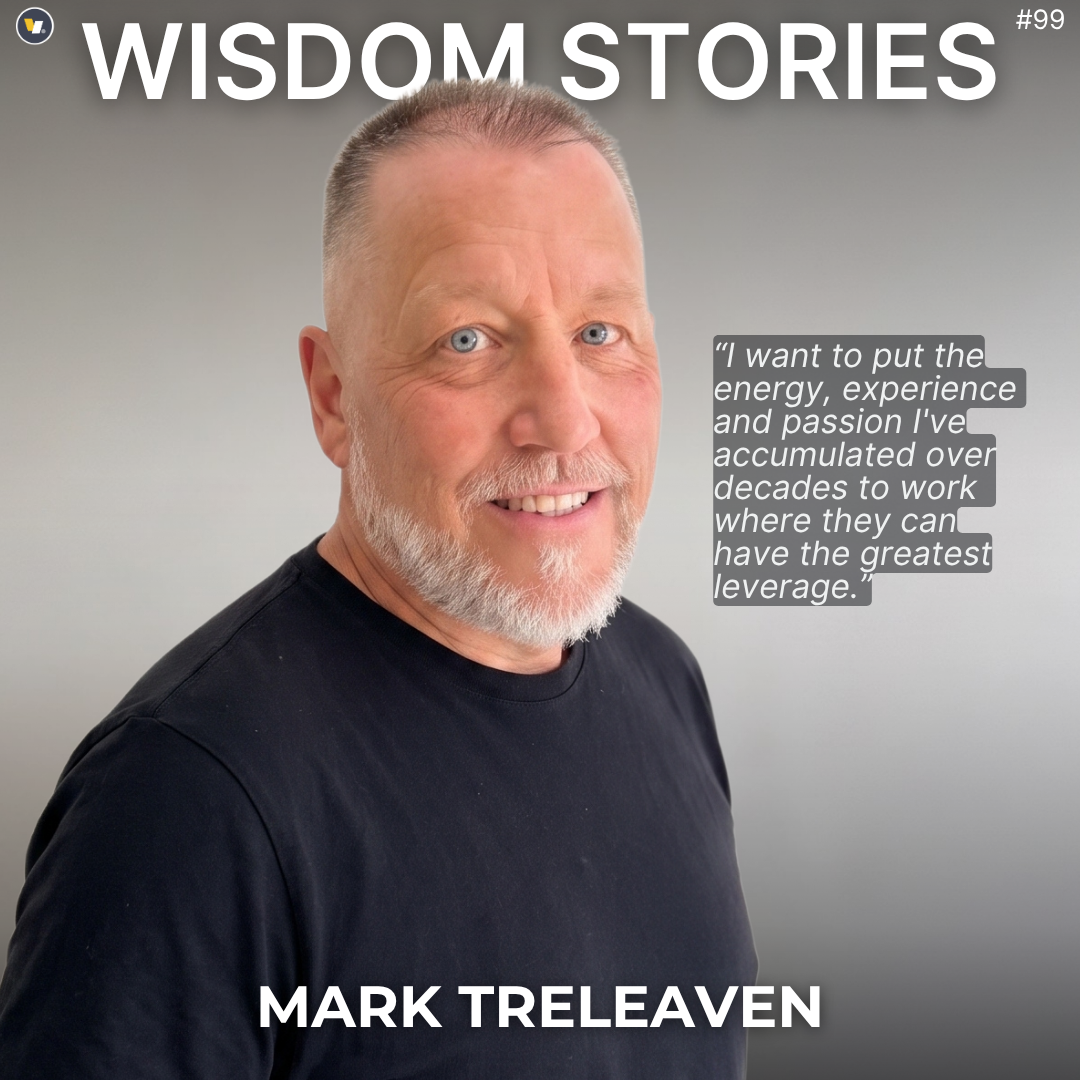
Wisdom Stories Ep.99: Mike Treleaven
Cultural expectations surrounding the elderly are being challenged today, and with good reason! While it was the norm to slow down and retreat into a quieter life post-retirement, more men and women are finding purpose and joy in doing the opposite. WisdomCircle honours such men and women by shining light on their journey through an inspiring series called “Wisdom Stories”. These people have successfully smashed stereotypes, and their stories remind us that life should be lived to the fullest, no matter what age or stage. “I came to Bali for three weeks. That was five years ago. I’d already spent more than three decades solving problems through technology, moving from development into leadership, consulting and emerging technologies. I arrived as the CTO of a high-impact project, expecting to stay for a short while. The project ran out of funding in 2023. I stayed. I created my own company to continue doing the kind of work I’d come to care about. Looking back, that decision reflected a shift that had been happening in me for some time. For much of my corporate career, the focus was on making people more money. Increasingly, I found myself asking a different question: how can we make money flow to the right causes? That didn’t mean leaving technology behind. It meant thinking differently about what technology was for. I’ve always been interested in what comes next. In 2016, I became deeply interested in blockchain. What stayed with me wasn’t cryptocurrency, but its potential as a truth-telling mechanism: using technology to create immutable proof that something happened. That connected with a bigger frustration I’d been carrying. We have extraordinary technology, but we don’t always use it for the greater good. COVID sharpened that question for me. If I was going to spend my days on Zoom, what could I really be doing, and where could I be doing it? The answer eventually took me to Bali. Today, my work spans founders, impact organisations and major businesses working on areas such as donor transparency, environmental impact, ESG and carbon markets. The projects are diverse, but the underlying question is the same: can we use what we know to create something that matters? That is also where fractional work makes sense to me. After decades of working across different technologies, organisations and problems, I can look back, recognise patterns and bring that perspective into a new challenge. I’m not there to impose a framework or tell people what to do. I prefer to work shoulder to shoulder, looking at the problem together and helping people see what might be possible. I think that’s what seasoned professionals have to offer. Not simply more knowledge. Perspective. You’ve seen enough different problems to recognise patterns, ask better questions and help others navigate uncertainty. That philosophy has shaped how I lead too. I’ve always cared about creating the conditions for people to thrive, particularly technical people who don’t necessarily fit conventional moulds. Sometimes leadership is simply making sure the right person is in the right environment to do their best work. And I’ve learned that leadership isn’t measured only by what we intend. A former colleague once told me I had been a difficult boss. It wasn’t easy to hear. But it reminded me that no matter how you think you are in the world, you need to ask people how they experienced working with you. Because it’s how they’re left, not how you’ve remembered it, that matters. I’m now in what I think of as the fifth phase of my life. I have the energy, experience and passion I’ve accumulated over decades, and I want to put them to work where they can have the greatest leverage. Technology will keep changing. So will the problems we need to solve. What I hope remains is the ability to use experience generously: to help people move forward, direct resources towards causes that matter, and leave something meaningful behind. For me, that’s what legacy looks like. Not simply what we built, or how much we grew. But the people we helped, the causes we moved forward, and what continues because we were part of it.” – Mark Treleaven Interviewed by Nehal Naik for WisdomCircle Explore more inspiring journeys—read more Wisdom Stories here.
Read more
Work From Home Singapore: Flexible Work Rules and How to Apply
Summary What Are Work From Home Jobs in Singapore? Work from home jobs in Singapore are roles where some or all of the work is performed from an employee’s home instead of the employer’s usual workplace. Under Singapore’s FWA framework, working from home is generally considered flexi-place, which provides flexibility over where work is performed. A work-from-home arrangement can mean different things depending on the employer. You might work from home on fixed days each week, split your time between home and the office, or work remotely for a defined period. It is therefore important to check the employer’s actual policy rather than assuming that “flexible” means fully remote. Common work-from-home roles include: Singapore’s employment data also shows that flexible work is no longer unusual. In 2024, 72.7% of establishments offered at least one type of scheduled FWA, while 38.4% offered scheduled tele-working. The figures cover a range of arrangements, including flexi-hours, part-time work and tele-working. For experienced professionals, this creates opportunities beyond conventional full-time employment. Specialist knowledge can sometimes be delivered through project-based consulting, advisory assignments or fractional roles without requiring a permanent office-based position. Which Industries Offer Work From Home Roles in Singapore? Technology and other knowledge-based sectors tend to offer more remote-friendly roles because much of the work can be completed digitally. However, remote work depends on the responsibilities of a particular job, rather than the industry alone. Singapore’s Ministry of Manpower has made clear that FWAs should reflect business and job requirements. Roles that require physical presence, such as many frontline and operational positions, may not be suitable for work from home. Employers may still be able to offer other forms of flexibility, such as adjusted hours or part-time arrangements. Industry or function Examples of potentially remote roles Technology Software developer, data analyst, cybersecurity specialist Finance and professional services Accountant, analyst, consultant, risk specialist Marketing and communications Digital marketer, content specialist, communications adviser Human resources Recruiter, HR consultant, learning specialist Customer operations Customer success, account manager, support specialist Education and training Online trainer, instructional designer, subject-matter expert Consulting Business consultant, strategy adviser, functional specialist Creative services Designer, copywriter, UX/UI specialist For jobseekers, the practical question is not simply whether an industry supports remote work. It is whether the specific role can deliver its expected outcomes without regular physical presence. Work From Home vs Hybrid vs Fully Remote: What Is the Difference? Work from home describes where an employee works, while hybrid and fully remote describe broader working models. Hybrid work combines home and office-based work. Fully remote work is designed to be performed away from a central workplace on an ongoing basis, subject to the employer’s policy. Arrangement Meaning What to check Work from home Work is performed from home for an agreed period How often can you work from home? Hybrid Work is divided between home and the workplace Are office days fixed or flexible? Fully remote The role is designed for ongoing remote work Can you work remotely from Singapore permanently? Flexi-time Flexibility over when work is performed Are there core working hours? Flexi-load Flexibility over the amount of work Is the role part-time or based on reduced hours? Singapore’s FWA framework broadly recognises three categories: This distinction is useful when searching for remote jobs in Singapore. A vacancy offering flexible hours may still require you to work from an office, while a hybrid role may offer only one or two home-working days each week. How to Find Legitimate Work From Home Jobs in Singapore The best way to find legitimate work-from-home opportunities is to verify the employer, understand exactly what “remote” means, and avoid offers that require you to pay money before you can earn it. ScamShield warns that job scams frequently involve supposedly simple work-from-home tasks, such as reviewing products or completing online activities for commissions. In 2025, victims in Singapore lost about S$123.5 million to job scams. Before accepting an opportunity, check: Established job platforms can be useful, but experienced professionals should also look beyond conventional job boards. Professional networks, industry contacts and specialist communities can uncover consulting, advisory and project-based opportunities that are never advertised as traditional remote jobs. If you are looking for part-time work from home in Singapore, useful search terms include “part-time”, “contract”, “fractional”, “consultant”, “advisor” and “project-based”. These can reveal opportunities where flexibility is built into the engagement rather than added to a conventional full-time role. How to Legally Request to Work From Home in Singapore? Singapore employees have a formal process for requesting Flexible Work Arrangements, including work from home. However, the TG-FWAR does not give employees an automatic right to work from home. Instead, eligible employees can make formal requests, which employers must properly consider based on business grounds and respond to within two months. The Tripartite Guidelines on Flexible Work Arrangement Requests took effect on 1 December 2024. They were developed through Singapore’s tripartite framework involving the Ministry of Manpower, National Trades Union Congress and Singapore National Employers Federation. The guidelines apply to formal FWA requests from employees who have completed their employer-defined probation period. They establish the process for making and considering a request, rather than requiring employers to approve every request. What Should a Work-From-Home Request Include? If an employer has its own process, employees should follow it. If no specific process exists, MOM says a formal request should be made in writing and include: A practical request should also explain how work will continue effectively. For example, an employee might specify the proposed home-working days, availability during working hours, arrangements for meetings and how deadlines and deliverables will be managed. This gives the employer useful information when assessing whether the arrangement is workable for the role and the organisation. What Happens After You Submit the Request? The process can be summarised in four steps: The guidelines are deliberately focused on the process rather than guaranteeing a particular outcome. Employers retain the ability to determine working arrangements based on their business and operational needs. Employees who believe their formal request
Read more
Top Cybersecurity Jobs in Singapore in 2026
Summary Cybersecurity jobs in Singapore span far more than technical security operations. The market includes cyber risk, governance, architecture, audit, consulting and executive leadership, creating several potential paths for experienced professionals. Singapore’s regulatory environment also places growing emphasis on cybersecurity governance and resilience, particularly for organisations responsible for Critical Information Infrastructure (CII). For professionals with backgrounds in technology, audit, risk, compliance or business leadership, this means moving into cybersecurity does not necessarily require starting again at an entry level. The more relevant question is which cybersecurity career path best matches the experience you already have and the capabilities you need to build. What Cybersecurity Jobs Are Available In Singapore? Cybersecurity jobs in Singapore cover the full security lifecycle, including governance, risk management, prevention, detection, incident response, security design and strategic leadership. Singapore’s Skills Framework for ICT identifies multiple cybersecurity career tracks and roles across these areas. Common roles include: Area Example roles Typical focus Governance and risk Cyber Risk Manager, Governance roles Cyber risk, controls, policies and oversight Security architecture Security Architect Designing secure technology environments Security operations Security Operations roles Monitoring and managing security events Incident response Incident Response roles Investigating and containing incidents Threat analysis Threat Analysis roles Understanding threats and attack patterns Testing Vulnerability Assessment, Penetration Testing Identifying security weaknesses Consulting Cybersecurity Consultant Assessing risks and advising organisations Audit IT or Cybersecurity Auditor Reviewing controls and security processes Leadership CISO, Security Director Security strategy, governance and executive oversight Singapore’s Cybersecurity Act provides the legal framework for national cybersecurity and applies specific requirements to CII across sectors including banking and finance, healthcare, energy, transport, water, infocomm, media, security and emergency services, and government. This regulatory environment creates a need for professionals who can understand cybersecurity alongside business risk, governance and operational resilience. What Skills Do Senior Cybersecurity Roles In Singapore Require? Senior cybersecurity roles require a combination of technical understanding, risk management, governance, communication and leadership. The balance depends on the position, but experienced professionals increasingly need to connect security decisions with business priorities and organisational risk. Key capabilities include: The IMDA Skills Framework for ICT identifies capabilities such as cyber risk management, security governance, security strategy, security architecture and stakeholder management across cybersecurity career pathways. This is particularly relevant for seasoned professionals. Someone who has spent years in enterprise risk, technology governance, internal audit or regulated industries may already have several capabilities that transfer into cybersecurity. Singapore is also raising cybersecurity expectations for certain organisations. In 2026, the Cyber Security Agency of Singapore (CSA) announced enhanced Cyber Trust Mark requirements for CII owners, CII auditors and licensed cybersecurity service providers, with implementation timelines extending into 2026 and 2027. 7 Most In-Demand Cyber Security Job Roles In Singapore There is no official ranking of the seven “most in-demand” cybersecurity roles in Singapore. However, Singapore’s Skills Framework for ICT identifies established cybersecurity career tracks spanning governance and risk, security operations, incident response, threat analysis, vulnerability assessment, and security design and engineering. For professionals assessing cybersecurity careers in Singapore, the following roles are particularly relevant: 1. Chief Information Security Officer (CISO) A CISO leads an organisation’s cybersecurity strategy, governance and overall security posture. The role typically involves working with executive leadership, technology teams and business functions to manage cyber risk and establish security priorities. Best suited to: Senior technology, security, risk or governance leaders with strong stakeholder and decision-making experience. 2. Security Architect A Security Architect designs and oversees secure technology environments. The role combines technical expertise with an understanding of business requirements, security risks and enterprise architecture. Best suited to: Experienced technology professionals with backgrounds in infrastructure, cloud, applications or enterprise architecture. 3. Cyber Risk Manager A Cyber Risk Manager assesses cyber and technology risks, evaluates controls and supports risk reporting and remediation. The role sits at the intersection of cybersecurity, enterprise risk and governance. Best suited to: Professionals from enterprise risk, IT risk, internal audit, compliance or regulated industries. 4. Cybersecurity Consultant A cybersecurity consultant helps organisations assess security risks and improve their security practices. Depending on the engagement, this can involve governance, risk assessments, security controls, incident response or broader cybersecurity programmes. Best suited to: Experienced professionals who enjoy solving different business problems and applying expertise across organisations. 5. Security Operations And Incident Response Professional Security operations professionals monitor environments and investigate suspicious activity, while incident response specialists focus on identifying, containing and recovering from security incidents. Best suited to: Professionals with strong technical security, investigation or operational experience who want to remain close to day-to-day cybersecurity activity. 6. Vulnerability Assessment And Penetration Testing Professional These professionals identify weaknesses in systems, networks and applications so organisations can address vulnerabilities before they are exploited. Singapore also regulates providers of penetration testing and managed Security Operations Centre monitoring services under its cybersecurity licensing framework. Best suited to: Professionals with strong technical skills in security testing, networks, applications or infrastructure. 7. IT Or Cybersecurity Auditor IT and cybersecurity auditors assess whether technology and security controls are appropriately designed and operating effectively. The role can involve governance, compliance, risk assessment and control testing. Best suited to: Experienced auditors and risk professionals looking to move closer to cybersecurity. How To Choose The Right Cybersecurity Job In Singapore? The right cybersecurity role depends on your existing expertise, technical depth, preferred working style and desired level of responsibility. Experienced professionals should assess where their current capabilities overlap with cybersecurity requirements instead of assuming they need to begin with an entry-level position. Consider four questions: 1. Do you want to stay technical? Security architecture, security engineering, vulnerability assessment and incident response require greater technical depth. 2. Do you prefer governance and risk? Cyber risk, cybersecurity governance, IT audit and compliance may suit professionals from audit, risk, finance or regulated industries. 3. Do you want executive responsibility? CISO and security leadership roles require strategic thinking, stakeholder management, governance and the ability to communicate risk at board and executive level. 4. Do you prefer project-based work? Consulting and advisory roles can suit professionals who want to
Read more
Digital Transformation in Singapore: A Guide for Modern Businesses
Summary Digital transformation in Singapore has moved beyond simply adopting new software. For businesses, it increasingly means changing how work gets done, how decisions are made and how customers interact with the business. Singapore’s digital economy reached S$128.1 billion in 2024, contributing 18.6% of GDP, while more than two-thirds of the digital economy came from digitalisation in non-Information and Communications sectors. That makes digital transformation a business issue across industries, rather than something limited to technology companies. For a company considering its next stage of growth, the question is increasingly how technology can solve a specific business problem, improve productivity or create a better way of serving customers. What is digital transformation in Singapore? Digital transformation is the use of digital technologies to improve business processes, customer experiences, operating models and decision-making. It can involve cloud computing, artificial intelligence, data analytics, automation, enterprise software and connected systems. The transformation lies in how these technologies change the way a business operates and creates value. The Guide: Digital Transformation in Singapore similarly describes transformation as integrating digital technology across different areas of a business. A digital transformation strategy in Singapore may involve replacing manual processes, integrating disconnected systems, using data for decision-making, automating repetitive work or developing new digital products and services. The approach varies by business. A manufacturer may use connected systems and analytics to improve production visibility, while a financial services company may modernise its customer journey or use AI to support operations. A professional services firm may automate administrative processes and improve how it manages client information. A useful way to view digital transformation is through four connected areas: Area What transformation can involve Processes Automation, workflow redesign and integration Technology Cloud, AI, enterprise platforms and digital infrastructure Customer experience Digital channels, personalisation and faster service Organisation New capabilities, skills, decision-making and ways of working Singapore’s Digital Enterprise Blueprint reflects this broader approach. Launched by the Infocomm Media Development Authority (IMDA) in 2024, it focuses on helping enterprises use AI and digital solutions, scale through cloud and integrated systems, strengthen cybersecurity and build digital capabilities. Benefits of digital transformation The benefits of digital transformation depend on the business problem being addressed. Technology investment is most useful when it changes a measurable part of the business rather than simply adding another tool to the existing technology stack. Common benefits include: 1. Greater operational efficiency Automation and integrated systems can reduce manual work, improve information flow and shorten process times. Employees can spend less time moving information between systems and more time on work requiring judgement and expertise. 2. Better decision-making Connected data gives leaders a clearer view of customers, operations, finances and performance. This can make it easier to identify problems, track trends and make decisions using current information. 3. Improved customer experience Digital channels can make interactions faster and more convenient. Integrated systems can also give employees better visibility into customer history, orders, service issues or other relevant information. 4. Greater flexibility and scalability Cloud infrastructure and integrated digital platforms can make it easier for businesses to scale operations, launch new services or respond to changing market conditions. 5. New opportunities for growth Digital transformation can create new products, services, business models and routes to market. It can also help established businesses compete with organisations that were built around digital operations from the beginning. 6. Stronger resilience Modern digital infrastructure, appropriate cybersecurity controls and better access to business data can help organisations respond more effectively to disruption. The important distinction is between adopting technology and transforming the business around it. Buying new software without changing the underlying process may create little value. Transformation requires the technology, people and operating model to work together. The Importance of Digital Transformation in Singapore Digital transformation is closely tied to Singapore’s economic growth and competitiveness. According to IMDA’s Singapore Digital Economy Report 2025, 95.1% of SMEs adopted at least one digital area in 2024, with the average number of areas adopted rising from 2.0 to 2.3. AI is accelerating this shift. SME AI adoption rose from 4.2% in 2023 to 14.5% in 2024, while adoption among non-SMEs increased from 44% to 62.5%. SMEs using AI-enabled solutions under the Productivity Solutions Grant also reported average cost savings of 52%. In March 2026, Singapore launched the National AI Impact Programme, which aims to support 10,000 enterprises in advancing AI adoption over three years. Finance & Insurance, Wholesale Trade and Manufacturing recorded the largest value added from digitalisation in 2024, highlighting the breadth of this shift across Singapore’s economy. For businesses, digital transformation increasingly means improving productivity, using AI and data effectively, strengthening digital resilience and developing the capabilities needed to manage change. This can require transformation leadership from a chief digital officer, CTO, CIO or external technology leader, depending on the organisation’s needs. Digital Transformation Challenges in Singapore Digital transformation challenges extend beyond choosing the right technology. Organisations also need to address legacy systems, skills, cybersecurity, investment decisions and organisational change. 1. Legacy systems and fragmented technology Older systems can make it difficult to integrate new platforms or share data across functions. Replacing them can also carry operational risk, particularly when they support critical business processes. 2. Skills and leadership gaps Transformation requires people who understand both technology and the business functions it needs to change. Organisations may engage a digital transformation consultant in Singapore for a defined initiative or experienced leaders on a fractional basis. A fractional CTO in Singapore, for example, can provide technology leadership without requiring a full-time executive function. IMDA reported that Singapore’s tech workforce grew from 208,300 in 2023 to 214,000 in 2024, with AI and data and cybersecurity among the fastest-growing areas. 3. Cybersecurity and data protection More connected systems create more points of exposure. Singapore’s Personal Data Protection Act (PDPA) establishes obligations covering areas such as consent, purpose limitation, accuracy and protection of personal data. The Cybersecurity Act provides Singapore’s national cybersecurity framework, including oversight of Critical Information Infrastructure. Amendments that came into force in October 2025
Read more
What Does a Relationship Manager Do? Role and Career Guide
Summary A Relationship Manager is a professional who builds and maintains relationships between an organisation and its clients, customers or business partners. But what does a relationship manager do day-to-day? The answer varies by industry, but the role typically involves understanding client needs, resolving issues, coordinating internally, identifying opportunities and strengthening long-term relationships. For seasoned professionals, relationship management can also be a practical second-career option. Experience in consulting, sales, banking, operations, procurement, technology or leadership often involves managing stakeholders, solving problems and building trust, all of which can transfer to relationship-focused roles. What Is A Relationship Manager? A relationship manager is responsible for developing and maintaining productive relationships between an organisation and its clients, customers or business partners. The role combines client service with commercial and operational responsibilities, with the balance depending on the organisation and sector. There are several variations of the role: Role Primary Focus Client Relationship Manager Managing external clients, retention, service and business development Customer Relationship Manager Managing customer needs, satisfaction and ongoing engagement Business Relationship Manager Connecting business units, partners or suppliers and improving collaboration Strategic Account Manager Managing high-value or strategically important accounts In smaller organisations, one professional may cover several of these responsibilities. In larger organisations, relationship management is often more specialised. Roles And Responsibilities of a Relationship Manager The relationship manager roles and responsibilities vary by sector, but the underlying objective is similar: understand stakeholders, solve problems and create value while supporting organisational goals. 1. Building And Maintaining Relationships Relationship managers maintain regular communication with clients and develop an understanding of their priorities, expectations and concerns. Consistency and trust are particularly important when relationships extend over several years. 2. Understanding Client Needs An effective RM looks beyond the immediate request. They identify the underlying business problem and connect the client with the appropriate product, service, specialist or internal team. 3. Resolving Problems When something goes wrong, the relationship manager may coordinate a response across operations, finance, technology, customer service or other teams. Their role is often less about solving every problem personally and more about ensuring that the right people address it. 4. Identifying Opportunities Relationship management can have a commercial dimension. A strong understanding of a client’s changing requirements can reveal opportunities for additional services, partnerships or solutions that genuinely meet those needs. 5. Using Data And Market Information Relationship managers may review customer activity, market developments, competitor movements and other business information. Analytical skills help them identify trends and anticipate client concerns. Investopedia identifies analytical, communication and coordination skills as important capabilities for relationship managers. In regulated financial-services roles, additional requirements may apply. SEBI’s Investment Advisers Regulations include client-facing roles such as service relationship managers and client relationship managers within the regulatory framework for persons associated with investment advice. However, the applicable certification depends on the nature of the work. In June 2026, SEBI specified a lighter NISM Series-XXV-B certification for persons associated with investment advice, including sales staff, relationship managers and other staff who perform only sales and other non-core services and are not directly involved in investment-advice activities. This framework applies to relevant personnel within SEBI-regulated firms and does not mean that every relationship manager is subject to SEBI requirements. What Skills Does A Relationship Manager Need? The most important relationship manager skills combine interpersonal strengths with commercial judgement, analytical ability and sector knowledge. 1. Communication And Active Listening Relationship managers work with people at different levels, from individual customers to senior executives. They need to communicate clearly, listen carefully and adapt their approach to different audiences. 2. Relationship Building Trust is central to the role. Reliability, responsiveness, empathy and sound judgement help turn individual interactions into lasting professional relationships. 3. Negotiation And Conflict Management Clients and organisations will sometimes have different priorities. Relationship managers need to handle disagreements constructively while protecting the organisation’s interests and preserving the relationship. 4. Commercial And Analytical Thinking Understanding how a business operates, what customers value and how products or services solve problems helps an RM make commercially sound decisions. Data can also reveal customer trends, risks and opportunities. 5. Industry Expertise Technical knowledge becomes increasingly important in specialised sectors. A banking RM needs to understand financial products and relevant regulations, while an enterprise technology RM may need to understand software, implementation and business processes. How To Become A Relationship Manager? There is no single route into relationship management. Employers generally look for relevant education, industry knowledge and experience dealing with customers, clients or business stakeholders. A practical pathway is: Professionals with substantial experience do not necessarily need to start at entry level. Someone who already understands an industry, its customers and its commercial challenges may be well suited to a senior or specialised relationship role. Which Industries Hire Relationship Managers In India? Relationship managers work across industries where client, customer or partner relationships influence business performance. Common sectors include: The title can vary considerably. Professionals searching for opportunities should also consider Client Relationship Manager, Customer Relationship Manager, Business Relationship Manager, Key Account Manager and Strategic Account Manager. In India’s financial-services sector, requirements can also depend on the nature of the work. Client-facing professionals associated with investment advice may fall within SEBI’s regulatory framework, while those performing only sales and other non-core services can be subject to the separate certification requirements specified by SEBI in June 2026. What Is The Career Path For A Relationship Manager? The career path for a relationship manager depends on the sector, organisation and professional’s strengths. A typical progression might look like: Relationship Manager → Senior Relationship Manager → Team Or Branch Manager → Regional Or Business Head Another route may focus on strategic accounts: Relationship Manager → Key Account Manager → Strategic Account Director → Business Development Or Commercial Leadership Relationship managers can also move into consulting, sales leadership, customer success, partnerships, client advisory or operations. For seasoned professionals, the value of the role often lies in how well existing experience translates into client-facing work. Industry knowledge, negotiation, communication and the ability to navigate complex business situations can remain valuable even when the professional changes roles or sectors. The opportunity may not always carry the exact title “Relationship Manager”, so experienced professionals should search for roles where client advisory, account development and relationship building are central to the work. Conclusion Relationship management sits at the intersection of people, business and problem-solving. A successful relationship manager understands what clients need, knows how their organisation can help and coordinates the people and resources required to deliver. For seasoned professionals, this can be a practical way to put accumulated experience to work in a new setting. Years spent building networks, advising stakeholders, managing accounts or navigating complex business situations can become valuable assets in client-facing roles. WisdomCircle helps experienced professionals explore opportunities where their expertise can create value. For those considering what comes next, relationship management is one pathway worth
Read more
Business Growth Consultant: What They Do and When to Hire One
Summary Introduction A Business Growth Consultant helps an organisation understand where its growth opportunities lie and what needs to change to pursue them. The role can span strategy, customer acquisition, sales, market expansion, positioning, pricing, partnerships and revenue performance rather than focusing on a single function. For organisations, the value often comes from bringing in an experienced external perspective at an important point in the business lifecycle. A consultant can assess the existing growth model, identify constraints and help leadership prioritise actions that support sustainable business performance. EmberTribe describes business growth consulting as a combination of diagnosis, strategy and guided execution rather than advice delivered in isolation. The role can therefore be relevant to startups, scale-ups and established organisations preparing for expansion, entering new markets or changing their business model. What Is a Business Growth Consultant? A business growth consultant is a professional who works with leadership teams to identify growth constraints, evaluate opportunities and develop practical plans to improve business performance. The role combines business analysis, growth strategy and commercial experience. Depending on the assignment, a consultant may examine the customer journey, revenue model, sales pipeline, market positioning, acquisition channels, partnerships, team capabilities and performance metrics. What Does a Growth Consultant Do? Typical responsibilities include: A growth strategy consultant may develop the roadmap without taking responsibility for every aspect of implementation. Execution may instead sit with internal teams, agencies or other specialist partners. What Skills and Experience Does a Business Growth Consultant Require? A strong business growth consultant combines commercial experience with analytical, strategic and interpersonal skills. There is no single qualification that defines the profession, but organisations typically value professionals who have demonstrated business results and can turn complex problems into practical decisions. Strategic thinking Identifies priorities and longer-term growth opportunities Analytical thinking Supports evidence-based diagnosis and decision-making Commercial acumen Connects recommendations to revenue, customers and profitability Market understanding Helps assess segments, competitors and opportunities Leadership Supports collaboration with senior stakeholders Communication Makes recommendations clear and actionable Change management Helps organisations put new strategies into practice Digital and technology literacy Supports data-led and technology-enabled growth Industry expertise Provides relevant context and reduces the learning curve The World Economic Forum’s Future of Jobs Report 2025 identifies analytical thinking as the most widely recognised core skill among employers. Leadership and social influence, resilience, flexibility and agility also rank highly, while AI and big data, technological literacy and creative thinking are among the skills expected to become increasingly important. For experienced professionals, this combination can be particularly valuable. Years spent managing teams, customers, markets, budgets or business units can provide the commercial judgement and context required for advisory work. Benefits Of Hiring a Business Growth Consultant A business growth consultant can give an organisation access to specialised experience without requiring an immediate permanent senior appointment. 1. An External Perspective Internal teams are often focused on operational priorities. An experienced consultant can examine the business independently, question established assumptions and provide an outside view of opportunities and constraints. 2. Faster Strategic Diagnosis When revenue growth slows, or a new market opportunity emerges, leadership may need clarity before committing significant resources. A consultant can structure the investigation, analyse available information and help identify the most important issues to address. 3. Access To Specialised Experience An organisation may need expertise in market expansion, go-to-market strategy, partnerships or revenue growth for a defined period. Business growth consulting allows the organisation to access that expertise without necessarily creating a permanent role. 4. Better Cross-Functional Alignment Growth frequently involves several functions. A consultant can help sales, marketing, product and leadership teams work towards a common roadmap, with clear priorities and measurable objectives. 5. Targeted Senior Expertise Consultants can be brought in for a particular business challenge, such as market entry, repositioning or commercial transformation. This can make senior expertise available where it has the greatest relevance. When To Hire A Business Growth Consultant For Your Company? Organisations should consider whether to hire a business growth consultant when they need strategic clarity, specialised expertise or an experienced perspective that is not readily available within the existing team. Common situations include: The right type of support depends on the problem. If an organisation has a clear strategy but needs execution capacity, an agency, specialist or internal hire may be more suitable. EmberTribe distinguishes between different growth support models, including consultants, fractional leaders and agencies. How Can Experienced Professionals Land A Business Growth Consultant Role? Experienced professionals can move into business growth consulting by positioning their previous leadership experience around the business problems they know how to solve. Rather than presenting a career only through job titles, it is useful to demonstrate commercial outcomes, strategic decisions and transferable expertise. For example, a former sales leader might focus on revenue expansion, channel development and go-to-market strategy. An operations executive could bring expertise in transformation and operating models, while a former marketing leader might specialise in customer acquisition, positioning and growth strategy. Useful steps include: WisdomCircle connects organisations with seasoned professionals for advisory, consulting and flexible work opportunities, creating a route for experienced leaders to apply their expertise to new business challenges. The World Economic Forum’s findings on changing skill requirements also highlight the importance of continuous learning as technology and business models evolve. Which Industries Hire Business Growth Consultants? Business growth consultants can work across industries because challenges involving customers, revenue, market expansion and strategic positioning are common to many types of organisations. Common sectors include: The expertise required varies by sector. A consultant working with a financial services organisation may need familiarity with regulated markets and financial products, while a SaaS engagement may focus more heavily on acquisition, retention, pricing and product-led growth. The role can also be relevant to small and mid-sized organisations that need experienced strategic input without building a large internal leadership function. India’s MSME ecosystem, for example, includes businesses across sectors and regions with evolving requirements around productivity, market access, digitalisation and business development. The Ministry of Micro, Small and Medium Enterprises reports on these areas as part of its work supporting the country’s MSME sector. Conclusion A Business Growth Consultant can help organisations turn a broad growth objective into a clearer, evidence-based plan. The role is particularly useful when leadership needs to understand what is limiting performance, assess new opportunities or decide where to focus resources. The strongest consultants bring more than frameworks. Relevant industry experience, commercial judgement and the ability to work effectively with senior stakeholders can help organisations make better-informed decisions and move from strategy towards implementation. For experienced professionals, business growth consulting provides another way to apply leadership and industry knowledge. Consulting work can be built around defined business challenges, allowing professionals to contribute their expertise beyond a conventional full-time executive role. WisdomCircle brings organisations and seasoned professionals together around this kind of expertise, helping companies access experienced talent for consulting, advisory and flexible engagements. Frequently Asked Questions 1. Where can experienced professionals find business growth consultant roles? Experienced professionals can find business growth consultant roles through professional networks, specialist consulting platforms, executive networks,
Read more
How to Become a Freelance Consultant? A Guide for Senior Experts
Summary Freelance consulting gives experienced professionals a way to apply their expertise without committing to a conventional full-time role. A freelance consultant works independently, bringing specialised knowledge to organisations for a defined problem, project or period. As organisations increasingly seek specialised skills without creating permanent positions, consulting is becoming an important part of India’s services economy. NITI Aayog’s 2026 review of India’s professional services sector identifies professional and management consulting as a key services sub-sector, contributing nearly 20% of India’s total services exports in 2024–25. For seasoned professionals, the opportunity is to turn years of functional and industry experience into a focused consulting offering that solves a clear business problem. Who is a freelance consultant? A freelance consultant is an independent professional who provides specialised advice, expertise or problem-solving support to organisations on a project, retainer or time-bound basis. Unlike a full-time employee, a freelance consultant typically works with multiple clients and is responsible for defining their services, finding business, agreeing fees, managing contracts and delivering the engagement. Freelance consulting can take several forms: Model How it works Project consulting The consultant is brought in to solve a defined business problem or complete a specific project. Advisory consulting The consultant provides ongoing expertise, recommendations or decision support, often through a retainer. Fractional consulting A senior professional performs part of a leadership or functional role without becoming a full-time employee. Specialist consulting The consultant provides deep expertise in a particular function, industry, technology or business problem. Interim consulting An experienced professional temporarily fills a leadership or specialist gap. The distinction between these models matters because the nature of the work, level of involvement and pricing can vary considerably. For example, a freelance business consultant might help a growing company redesign its go-to-market strategy. A former HR leader could advise on organisation design. A technology executive could help a company evaluate an AI implementation roadmap. What does a freelance consultant actually do day to day? A freelance consultant’s work combines client delivery with business development and administration. Client work can include: Independent consultants also spend time finding opportunities, maintaining professional relationships, preparing proposals, negotiating contracts, raising invoices and managing finances. This is an important difference between consulting as an employee and running an independent practice. Expertise drives client value, but business development and administration keep the practice sustainable. What skills and credentials do you need to work as a freelance consultant? Freelance consultants generally need three types of capability: subject-matter expertise, consulting skills and the ability to operate an independent business. 1. Deep functional or industry expertise Clients typically hire consultants because they need knowledge they do not have internally. Years of experience can therefore be a significant advantage. This could include expertise in: 2. Problem-solving and communication Being good at a function does not automatically make someone an effective consultant. Consultants need to diagnose problems, ask the right questions, communicate recommendations clearly and work with stakeholders who may not share their expertise. Skills such as structured thinking, presentation, negotiation, facilitation and stakeholder management become particularly important. 3. Commercial skills An independent consultant also needs to understand the business side of the practice. This includes proposal writing, pricing, contracts, invoicing, pipeline management and basic financial planning. Do you need a specific qualification? There is no single qualification required to become a freelance consultant. Requirements depend on the service offered. Some professions in India, including legal, accounting, architecture and healthcare, have specific qualification, registration or licensing requirements. NITI Aayog’s 2026 review of professional services highlights this distinction, with other professional services facing lighter regulation. For senior professionals, the key consideration is whether their experience and credentials demonstrate credible expertise in the service they offer. How to become a freelance consultant? Becoming a freelance consultant is usually less about acquiring an entirely new career identity and more about packaging existing expertise into a viable independent offering. 1. Identify the problems you can solve Start with the problems organisations already pay for, rather than simply listing everything you know. For example, instead of positioning yourself as an “experienced operations professional”, a more specific proposition might be: The more clearly a client can recognise their problem in your proposition, the easier it becomes to start a conversation. 2. Define your consulting niche Your niche can be defined by function, industry, problem or a combination of these. A former sales leader could work with B2B companies on sales strategy. A finance professional could specialise in financial planning for growing businesses. An HR executive could advise companies going through restructuring or expansion. A narrow starting point does not prevent you from accepting broader work later. It simply gives potential clients a clearer reason to approach you. 3. Turn your experience into an offering Think about what the client actually receives. Your offering might be: This makes the transition from “I have experience in this area” to “Here is the business problem I can help you solve.” 4. Build your professional proposition Your LinkedIn profile, website, professional bio and proposals should make three things easy to understand: Focus on relevant achievements, decisions and outcomes rather than reproducing a long employment history. For a senior professional, decades of experience can be difficult for a potential client to evaluate quickly. A focused proposition makes that experience easier to understand. 5. Start with your existing network Former colleagues, clients, suppliers, business partners and professional contacts can be valuable sources of early consulting opportunities. Let people know what you are now offering. A conversation about a specific business challenge can often lead to an opportunity more naturally than a generic announcement that you are “available for consulting.” Professional networks and specialist talent platforms can also help independent consultants access organisations looking for experienced expertise. 6. Establish the business basics Before taking on paid work, set up the practical foundations of your consulting practice. Depending on your circumstances, this can include: Tax treatment depends on the nature and structure of the work. The Income Tax Department’s guidance distinguishes between different forms of business or professional income and provides specific provisions for eligible professionals. GST requirements can also depend on turnover, the
Read more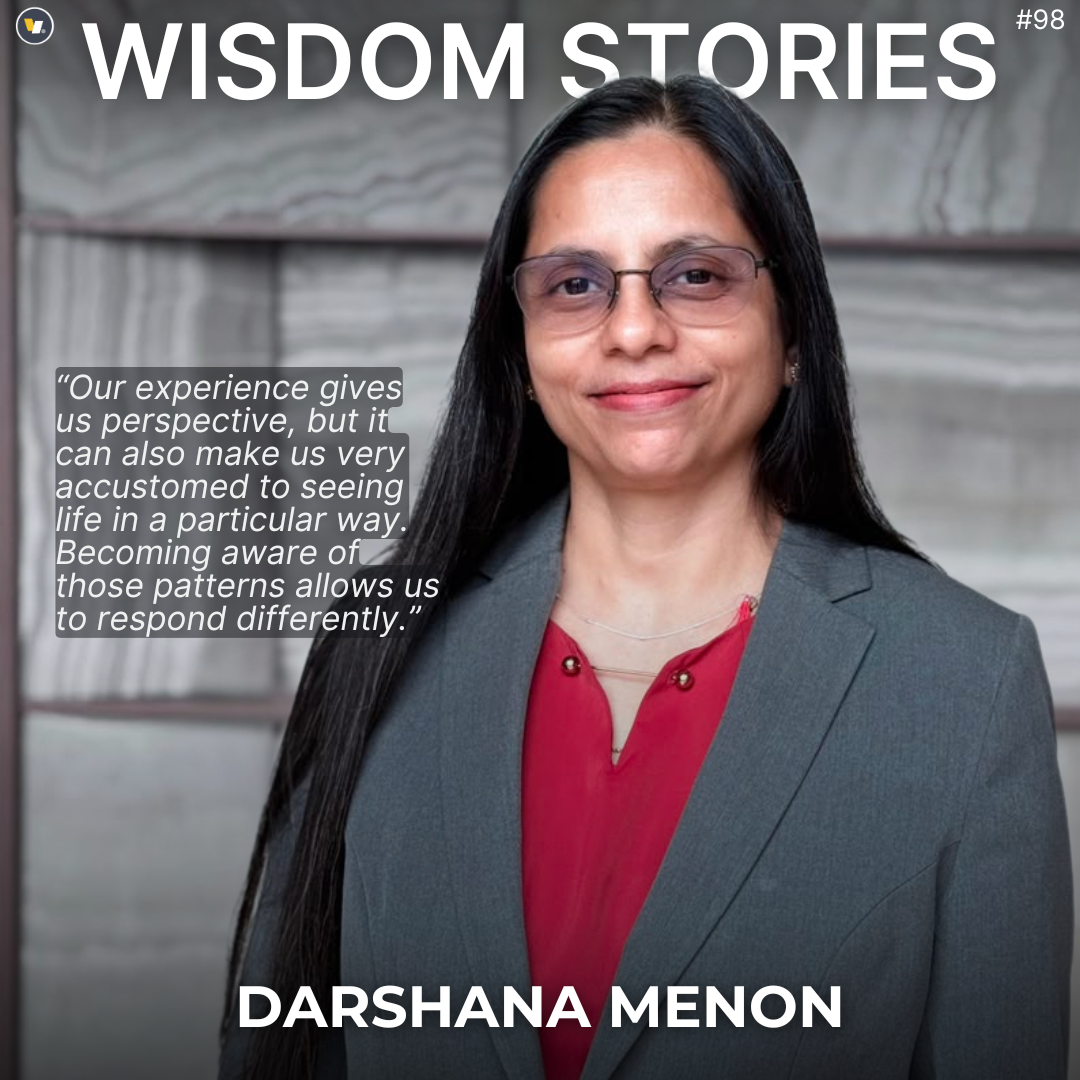
Wisdom Stories Ep.98: Darshana Menon
Cultural expectations surrounding the elderly are being challenged today, and with good reason! While it was the norm to slow down and retreat into a quieter life post-retirement, more men and women are finding purpose and joy in doing the opposite. WisdomCircle honours such men and women by shining light on their journey through an inspiring series called “Wisdom Stories”. These people have successfully smashed stereotypes, and their stories remind us that life should be lived to the fullest, no matter what age or stage. “After 50, something begins to change. The children are growing up or have left home. A career that once gave you identity and recognition may be approaching retirement. Responsibilities become lighter, and the roles that defined you for decades begin to shift. I see many people asking themselves the same question at this stage: Who am I now? For years, we have been someone’s parent, partner, leader, colleague or caregiver. We have been needed. We have been recognised. Then suddenly, we find ourselves looking for that recognition again, often in other people’s eyes. I believe this is where we need to turn inward. When I work with people, I encourage them to recognise what they have already built within themselves: their experience, their qualities, their resilience and everything they have learnt along the way. There comes a point when we have to develop our own respect for ourselves instead of waiting for somebody else to provide it. I call this the second innings of life. It can be a time to discover what you want for yourself after spending so many years living for others. For me, practices such as meditation and breath work are part of that process. I have been learning and practising for decades, and my own journey eventually led me into healing. I began exploring these practices when I was young, and over the years they became something I could use not only for myself but to support others. One experience particularly stayed with me. A guitarist in a group I sang with injured his fingers just three days before a performance. I had not yet trained as a Reiki healer, but I remembered an experience from years earlier when my father had guided me through a healing practice. I used what I remembered and asked him to lie down and rest while I guided him. According to the guitarist, the fingers looked as though somebody had stitched them, and he was able to perform. That experience made me realise that I needed to learn properly. What had been a personal practice could become a way to help others. Over the last decade, I have worked with more than 1,200 people and trained more than 100 students. The greatest lesson has been that healing begins with how we process our experiences. I often describe the mind as a processor. Two people can experience the same situation and respond completely differently because they process it differently. That is why I encourage people to pay attention to their thoughts and their breathing. “When you breathe right, you live right.” Learning to breathe consciously can create space to notice the patterns we have carried for years and consider whether they are still serving us. This becomes particularly important as we age. Our experience gives us perspective, but it can also make us very accustomed to seeing life in a particular way. Becoming aware of those patterns allows us to respond differently. For me, longevity is about having the energy and mental capacity to live the years ahead meaningfully. And once we begin taking care of ourselves, another question emerges: What do I want to give back? When responsibilities begin to reduce, there is an opportunity to use everything we have learnt in a new way. That contribution could be mentoring, teaching, creating, supporting someone through a transition or simply being more present for the people around us. But I believe we have to receive before we can give. Take care of yourself. Learn to breathe. Create space. Understand your thoughts. Rediscover what gives you energy. Then look at everything you have gathered over the years and ask how it can become useful to someone else. Reaching 50, 60 or beyond can give us the freedom to ask a question we may not have had the time to ask before: What do I want to do with the life that is still mine? That, to me, is where the second innings begins.” – Darshana Menon Interviewed by Nehal Naik for WisdomCircle Explore more inspiring journeys—read more Wisdom Stories here.
Read more
How to Retire Early? A Simple Guide to Early Retirement Planning
Summary Early retirement can look very different at different stages of a career. For a seasoned professional in India, it may mean stepping away from a demanding executive role at 55, leaving full-time employment at 60, or simply choosing greater control over how and when to work. The financial question is important, but so is the question of what comes next. What Does Early Retirement Mean? Early retirement generally means leaving full-time employment earlier than the conventional retirement age. There is no single age that defines it. For one professional, it may mean retiring in their 50s; for another, it may mean leaving a corporate leadership role and moving into selective consulting or advisory work. Retiring early also does not necessarily mean stopping work altogether. A seasoned professional may leave a full-time role while continuing with a few advisory, consulting or project engagements. For professionals in India, early retirement planning therefore involves two questions: Can I afford to stop relying on a regular salary, and what do I want my professional life to look like afterwards? The second question is often overlooked. How Much Money Do You Need to Retire Early? There is no universal retirement corpus for early retirement. The amount you need depends on your annual expenses, retirement age, inflation, investment returns, healthcare and insurance costs, taxes, liabilities and how long your savings may need to last. Someone retiring at 55, for example, may need a larger corpus than someone retiring at 65 because their assets could need to support them for longer. SEBI’s retirement planning tools consider factors such as current expenses, inflation, desired retirement age, expected years of life, post-tax returns and existing investments when estimating retirement needs. What should you include in an early retirement calculation? Factor Why it matters Current annual spending Establishes your starting lifestyle cost Retirement age Determines how long your assets may need to support you Inflation ₹1 lakh today will not have the same purchasing power years from now Healthcare Medical and insurance costs can become significant later in life Existing investments EPF, PPF, NPS, mutual funds, property and other assets may contribute to your financial base Debt and liabilities Outstanding loans reduce the amount available for retirement Other income Rent, pension, dividends or professional income can reduce withdrawals from investments Emergency reserve Protects the retirement corpus from unexpected expenses SEBI advises investors to plan for retirement early, account for inflation and unexpected expenses, maintain adequate insurance and diversify investments. Its retirement calculator also cautions that market returns cannot be predicted with certainty, so the estimates are illustrative. For an individual plan, a regulated financial adviser can help assess the assumptions and risks rather than relying on generic rules of thumb such as the “25x” rule. How Do You Retire Early? Retiring early is less about finding a single financial shortcut and more about creating enough financial resilience to make full-time employment optional. 1. Define what early retirement means for you Start with the life you want, not a target age alone. Consider where you want to live, your expected spending, travel, family commitments, healthcare needs and whether you want to continue earning in some form. A professional planning to leave a CXO role at 55 but continue with two advisory mandates has a very different financial requirement from someone who wants no earned income after leaving employment. 2. Calculate your retirement spending Separate essential expenses from discretionary ones. Include housing, food, utilities, insurance, healthcare, travel, family commitments and taxes. Also consider expenses that may change after retirement. Commuting and work-related costs may fall, while travel, hobbies or healthcare could increase. 3. Build a retirement corpus Estimate how much capital you need based on your expected retirement period, inflation and investment assumptions. Then assess your existing assets and the additional savings required. India’s SEBI Investor platform provides retirement calculators and an investment tracker that can help investors model and monitor their retirement goals. 4. Review your investment and income mix An early retiree may need a portfolio designed to provide both growth and accessible income. Diversification matters because relying heavily on one asset or income source can increase risk. The appropriate allocation depends on individual circumstances, risk tolerance and financial goals. A regulated financial adviser can help determine an appropriate strategy. 5. Plan for healthcare and emergencies Healthcare is one of the risks that deserves particular attention when planning an early retirement. Leaving employment can also change access to employer-provided benefits. Maintain an emergency reserve and appropriate health and other insurance rather than assuming that the retirement corpus alone will cover every unexpected expense. SEBI specifically recommends adequate savings for emergencies and insurance for unforeseen expenses and medical emergencies. 6. Review pension and retirement accounts Understand when and how your EPF, NPS and other retirement assets can be accessed, rather than assuming they are immediately available when you stop working. For example, PFRDA’s current NPS All Citizen Model rules distinguish between normal and premature exits, with different provisions for lump-sum withdrawals and annuity purchases. 7. Put an estate plan in place Early retirement is also a good point to review nominations, wills, powers of attorney and how assets should eventually be transferred. SEBI notes that estate planning can help determine how assets are managed and distributed and recommends reviewing a will as circumstances and laws change. 8. Decide how you want to stay professionally engaged Early retirement does not have to mean stopping work altogether. Consulting, advisory, fractional, project-based and board roles can provide income while allowing seasoned professionals to apply their experience selectively. WisdomCircle connects seasoned professionals with organisations seeking this kind of expertise, making it possible to stay professionally engaged without returning to a conventional full-time role. Benefits of Early Retirement The potential benefits of early retirement go beyond having more free time. For many seasoned professionals, the strongest benefit may be the ability to choose what comes next rather than being defined by a single full-time role. Disadvantages of Early Retirement Early retirement also carries financial and personal risks. The decision should therefore be evaluated as carefully as the decision to invest. Potential drawback What to consider Longer retirement period Your corpus may need to support you for several decades Inflation risk Rising costs can reduce purchasing power over time Market volatility Poor investment performance early in retirement can affect future withdrawals Healthcare costs
Read more